Advances in Breast Cancer Research
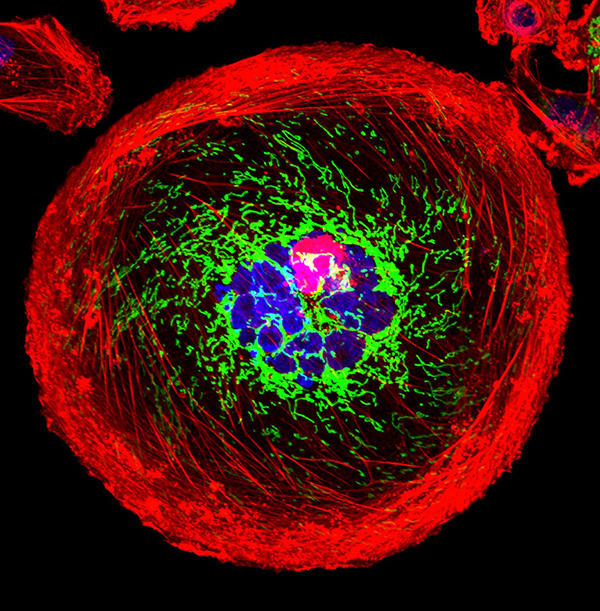
Photo Credit: A polyploid giant cancer cell (PGCC) from triple-negative breast cancer. National Cancer Institute
Research breakthroughs are happening every day in the fight against breast cancer. What begins as an unusual finding in a single lab experiment can become the subject of peer-reviewed research, clinical trials, and lifesaving therapy down the road. Louisiana Cancer Research Center scientists are constantly testing hypotheses and adding to the growing body of knowledge that drives significant advancements. Several researchers from LCRC member institutions identified recent breakthroughs that should give patients reason for hope.

Melanie Sheen, MD, Ochsner Health:
"I am most excited about the recent advances in antibody-drug-conjugates (ADCs) for treatment of triple negative breast cancer (TNBC). Antibody-drug-conjugate is a new class of drugs that uses an Antibody against a tumor antigen to carry powerful anti-cancer Drug conjugated to the antibody. ADC is like a targeted precision chemotherapy. TNBC is an aggressive subtype of invasive breast cancer that is negative in estrogen receptor, progesterone receptors, and HER2 protein overexpression, and thus lacks the therapeutic targets that are currently used to treat other types of breast cancer, such as hormone therapy or Her2-targeted therapy. However, there is a surface protein called Trop2 that is abundantly expressed in TNBC cells but not expressed in normal cells, and researchers had been developing Trop2-targeting ADCs to treat TNBC. The first Trop2 ADC, called Trodelvy, was approved for TNBC as a second line treatment in 2021, and in June 2026, approved for first-line treatment of TNBC. In May 2026, a next generation Trop2-ADC, Datroway, was approved in the US as first TROP2-directed antibody drug conjugate for 1st-line treatment of patients with metastatic triple-negative breast cancer. These ADCs are game changers in the treatment of triple negative breast cancer.
I'm most excited about the possibility of the FDA approving new medications to target estrogen receptors in patient with higher risk breast cancer. We have not had new medications in this space in over 20 years. The approval of new oral SERDs (serum estrogen receptor degraders) will change the way that we treat ER+ breast cancer."

Michelle Loch, MD, LSU LCMC Health Cancer Center:
"One of the areas of breast cancer research that gives me the most hope is the effort to make treatment for early-stage triple-negative breast cancer more effective while reducing the toxicity patients experience. We have made important advances in treating this aggressive subtype, but the chemotherapy and immunotherapy regimens that offer the best chance of cure can also cause significant short- and long-term side effects. At the LSU LCMC Cancer Center, we are participating in the SWOG S2212 (SCARLET) clinical trial, which is evaluating whether a shorter, anthracycline-free treatment approach can maintain excellent outcomes while reducing exposure to chemotherapy drugs that can cause lasting complications, including heart damage. Importantly, our goal is not only to evaluate treatment efficacy, but also to understand how treatment affects patients' quality of life.
I am particularly excited about clinical trials that help us identify opportunities to safely tailor and de-escalate treatment without compromising the chance of cure. By studying which patients benefit most from specific therapies and how they respond to treatment, we hope to avoid unnecessary toxicity while preserving the best possible outcomes. Ultimately, this research has the potential to reduce the long-term side effects of treatment and improve survivorship, allowing patients not only to live cancer-free but also to enjoy healthier lives with fewer lasting complications from the therapies that helped to cure them."
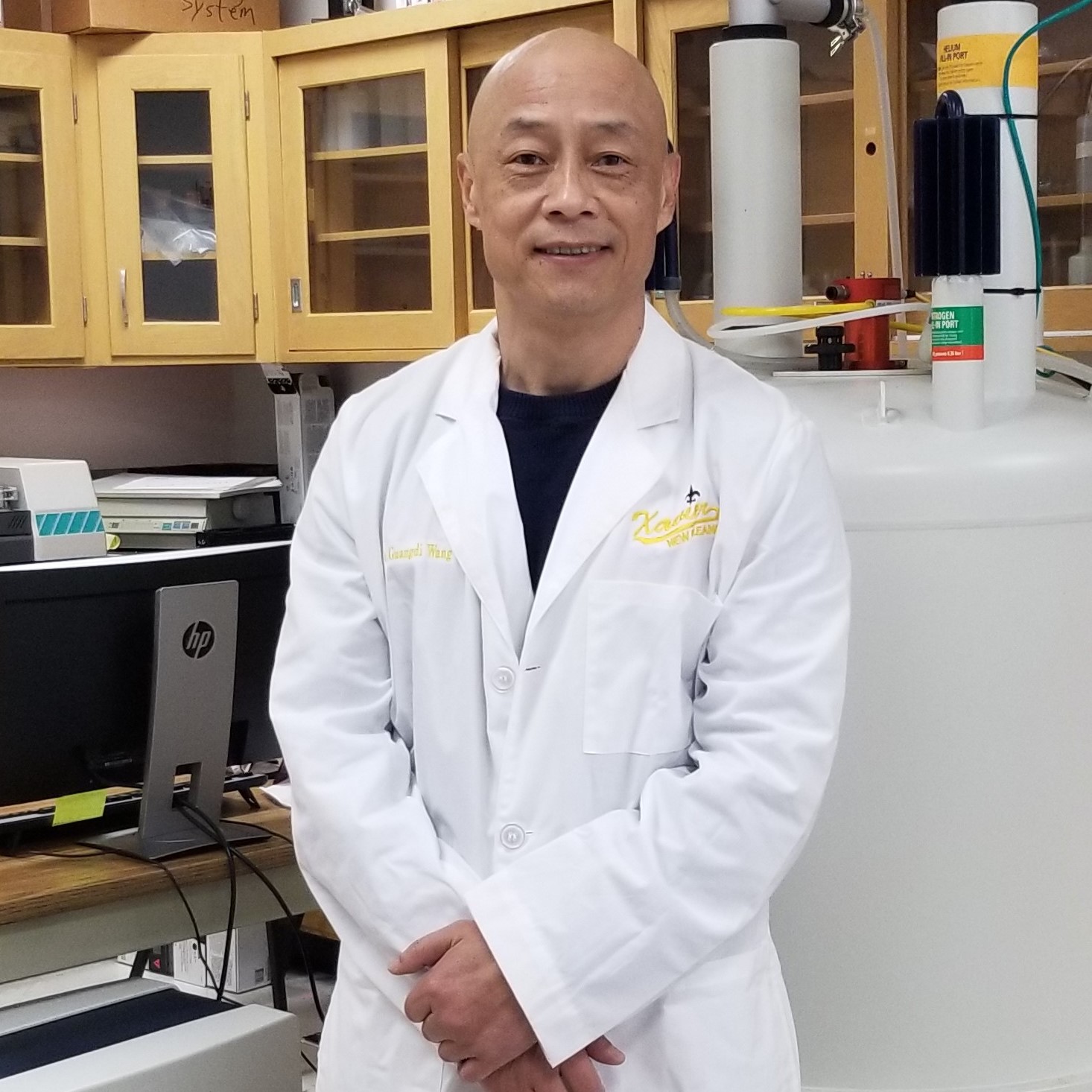
Guangdi Wang, PhD, Xavier University of Louisiana:
"I am most excited about the recent advances in antibody-drug-conjugates (ADCs) for treatment of triple negative breast cancer (TNBC). Antibody-drug-conjugate is a new class of drugs that uses an Antibody against a tumor antigen to carry powerful anti-cancer Drug conjugated to the antibody. ADC is like a targeted precision chemotherapy. TNBC is an aggressive subtype of invasive breast cancer that is negative in estrogen receptor, progesterone receptors, and HER2 protein overexpression, and thus lacks the therapeutic targets that are currently used to treat other types of breast cancer, such as hormone therapy or Her2-targeted therapy. However, there is a surface protein called Trop2 that is abundantly expressed in TNBC cells but not expressed in normal cells, and researchers had been developing Trop2-targeting ADCs to treat TNBC. The first Trop2 ADC, called Trodelvy, was approved for TNBC as a second line treatment in 2021, and in June 2026, approved for first-line treatment of TNBC. In May 2026, a next generation Trop2-ADC, Datroway, was approved in the US as first TROP2-directed antibody drug conjugate for 1st-line treatment of patients with metastatic triple-negative breast cancer. These ADCs are game changers in the treatment of triple negative breast cancer."
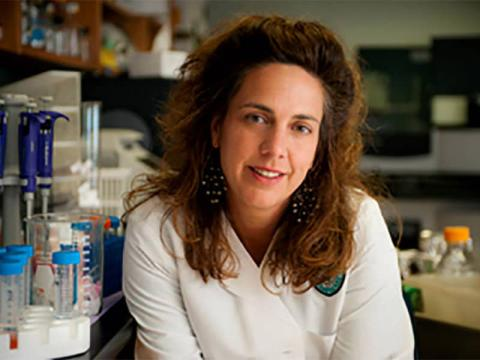
Bridgette Collins-Burow, MD, PhD, Tulane University School of Medicine:
"One of the most promising areas of breast cancer research is our growing understanding of the biological mechanisms that drive cancer progression, treatment resistance, and metastatic recurrence. Although significant advances in early detection and treatment have improved outcomes for women diagnosed with breast cancer, preventing metastatic recurrence remains one of our greatest challenges. As a physician-scientist, I have the privilege of caring for patients with breast cancer while also participating in research aimed at addressing the challenges we face in the clinic. For more than 18 years, my work in the Burow/Collins-Burow laboratory at Tulane has focused on advancing our understanding of breast cancer biology and identifying opportunities to translate scientific discoveries into improved patient care.
What gives me the most hope is the movement toward more personalized approaches to predicting and preventing recurrence. Advances in molecular profiling, circulating tumor DNA testing, and our understanding of the tumor microenvironment are creating new opportunities to identify patients at greater risk and develop more effective prevention strategies. One of our research projects at Tulane focuses on understanding how interactions between breast cancer cells and their surrounding tissue environment may contribute to the development of bone metastases, a common site of recurrence in hormone receptor-positive breast cancer. By identifying the biological factors that promote metastatic progression, we hope to develop biomarkers that can identify patients at increased risk and guide targeted therapeutic interventions to prevent metastatic recurrence. Ultimately, the goal is not simply to develop better treatments for metastatic breast cancer, but to identify patients at risk and intervene before metastatic disease develops."